
Adrienne Webster (University of Glasgow)
The Population Geography Research Group and Hebe Nicholson, as prizes officer, have the pleasure of introducing this year’s recipient of the Bob Woods Postgraduate Dissertation Prize. Adrienne Webster’s MRes dissertation, Geographies of Care in the Homes for Ukraine Scheme, stood out for its exceptional quality and offered findings that were both novel and impressively nuanced. It is a wonderful example of the kind of rigorous, engaged human geography we hope to celebrate through this prize.
Adrienne is a recent graduate of the University of Glasgow, where she completed an MRes in Human Geography. She now lives in Glasgow and has recently taken up a new role at Shelter Scotland — a fitting next step for a researcher whose work is so deeply attentive to questions of housing, belonging, and welfare.
Below, Adrienne introduces herself and her research in her own words.
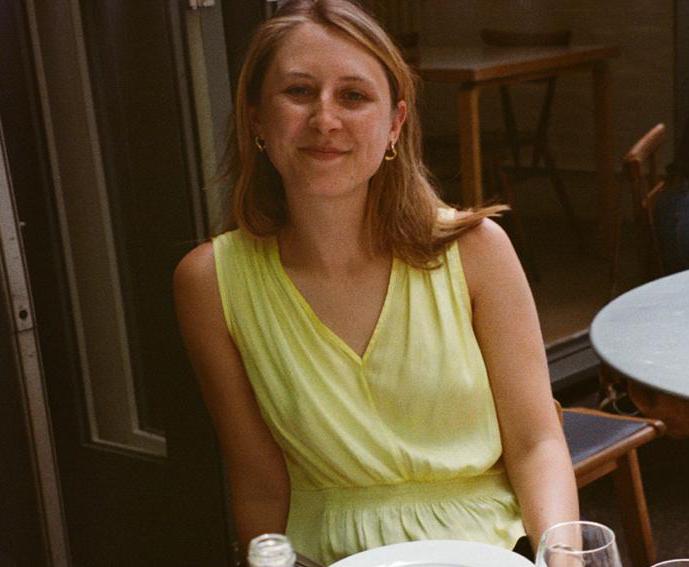
My name is Adrienne Webster and I am a recent graduate from the University of Glasgow with an MRes in Human Geography. My research focused on a humanitarian visa pathway established in 2022 for Ukrainian refugees, the Homes for Ukraine scheme. The scheme allowed people in Britain to sponsor the visa of a Ukrainian individual or family, who would live with them in their home for a minimum of six months. Within 24 hours of the scheme opening, 120,000 people had registered an interest in hosting Ukrainians and by June 2024, 150,715 Ukrainians had travelled to the UK on Homes for Ukraine visas. Although I have no personal connection to the scheme, I became interested whilst working as a Caseworker for a north London MP in 2022.
Many Ukrainian refugees were hosted in the local area and came to meet the MP, along with their hosts. From a policy perspective, the Homes for Ukraine scheme was unique in its scale and apparent generosity towards Ukrainian refugees and their sponsors, who were paid by the Government to offer housing. The British population were therefore framed as being responsible for the housing and holistic wellbeing of Ukrainians fleeing war. What happens when responsibility for resettling refugees is assumed by the wider public was the driving question behind my research.
My dissertation explored how care, as a motivation and practice, shaped relationships between Ukrainian refugees and their Homes for Ukraine scheme hosts. Underpinning my analysis were feminist geographies which theorise care as a dynamic process shaped by material, political and social factors. Analysing eight semi-structured interviews with hosts and Ukrainian refugees, my research concluded that care extended beyond providing the basic practical needs of the refugees. Strong interpersonal connections emerged, and the repeated use of the word ‘family’ by hosts and guests to describe their relationships illustrated how such schemes can generate new ways of establishing communities. Simultaneously, participant narratives of sharing a family home also revealed ambivalent relations and feelings which emerged between hosts and guests, highlighting how such informal hosting arrangements can produce messy and potentially conflictual sites of care.
Currently, I’m living in Glasgow and have just started a new role at Shelter Scotland

