
Professor Alison McCleery
The population geography community is sad to hear of the passing of Alison McCleery earlier this year. Alison was an active member of the Population Geography Research Group and described as a ‘tower of strength’ in her role as Secretary. The following is a tribute written by Allan Findlay.
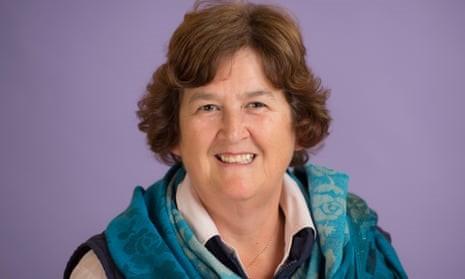
Professor Alison McCleery (nee Bruce) died in February 2023 after a long period of illness.
She was one of the influential cohort of students that graduated from the Department of Geography at the University of St Andrews in the mid-1970s. Inspired particularly by staff such as John Paterson, Andrew Dawson and Kay MacIver, she went on to conduct research on economic development issues, as well as on a range of topics in population geography. Alison was always very proud of her St Andrews’ academic heritage, talking often of the inspiration she drew from engaging in the many undergraduate field trips organised by the Department of Geography, as well as of the key academic links offered to her by her time in St Andrews.
Graduating from St Andrews in 1976, she moved to the University of Glasgow for her doctoral research. She then spent time as a senior researcher at the Central Research Unit of the Scottish Development Department and found great satisfaction in applying the research and analytic skills she had acquired as a student. In 1981 she moved to Edinburgh Napier University where over a forty-year career she served as senior lecturer, professor, and research director. She also spent time at the Council of Europe in Strasbourg and as visiting professor at France’s premier demographic centre (the Institut National d’Etudes Demographiques) in Paris.
As an economic geographer with an early interest in the significance of Scotland’s cultural heritage, she researched aspects of ‘peripheral’ geographies in many parts of the world. For a time, she was a member of the IGU commission on peripheral regions, as well as secretary of what today is called the Population Geography Research Group (PGRG) of the Royal Geographical Society-Institute of British Geographers. Those of us who attended PGRG conferences with Alison in the 1980s, will remember fondly that she was sometimes accompanied by one of her children. It was therefore not without personal experience that she presented her research on ‘Migration, marriage and the lifecourse’ (1999). Her later research focus lay more in the realms of development and culture such as her study of ‘Living Culture and Tourism in Scotland’ (2015).
Most of us will remember Alison not only for her scholarly contributions but also for her generous wider contributions to the discipline, and to the academy in Scotland. For example, she served as editor of the Scottish Geographical Journal, and was an excellent ambassador for geography and social science during her time on the Research and Innovation Committee of the Scottish Funding Council. She also gave much time to inter-university doctoral training programmes, winning the Times Higher Award for UK research training (2010). Later she took on the time-intensive role of Director (2016-18) of the Economic and Social Research Council’s Doctoral Training Centre for Scotland. In this short and selective appreciation of her work, it would be remiss to restrict her influence to a list of publications or academic roles. Those of us privileged to know Alison from her undergraduate days onwards, cherished not only her earnest and scholarly interest in a wide range of social science research topics, but the integrity, deep care, and intense professionalism that she brought to every aspect of her work. Throughout her career she gave time selflessly to so many people as lecturer, research supervisor, co-researcher, colleague, co-author and editor. All those of us who benefited from sharing part of her academic journey will be forever grateful to her.
Please see the following obituary: https://www.theguardian.com/science/2023/mar/22/alison-mccleery-obituary
Professor Aileen Stockdale
Professor Aileen Stockdale was a leading light in her fields of interest including internal migration and rural communities, with research that commanded the highest academic respect. She was a long standing Fellow of the Society and supporter of PopGRG.
Aileen was, since 2006, based at Queen’s University Belfast and prior to that was lecturer at the University of Aberdeen. Aileen’s work focused on rural migration and, in particular, the lives of people in marginal landscapes where there had been much emigration. The work focused on those in rural areas, and the new lives of those who left. Her latest ESRC funded project Staying in the Rural focussed directly on immobility and had collaborators from the Netherlands and Germany.
Professor Greg Keefe, Head of the School of Natural and Built Environment at QUB, has emphasised how much Aileen will be missed as a major part of the community in the School, both within and beyond her discipline. He notes that Aileen was a committed feminist and worked with many of the younger female staff to help and support them develop in their careers. She was exceptionally generous with her time in this, both formally and informally.
In recent years Aileen contributed to initiatives of the Population Geography Research Group. She co-authored (with Nigel Walford) the chapter Lifestyle and Internal Migration in the Research Group’s edited collection Internal Migration: Geographical Perspectives and Processes(edited by Smith, Finney, Walford and Halfacree, 2015, Routlegde) and in 2020 took part as an interviewee in the PopGeog (Hi)Stories project.
As part of the project, Aileen encouraged Population Geographers to ‘think big’. She remarked: “I think there is something in population geography going forward… positioning themselves more as a central cog for inter-disciplinary studies… you know you’re already beginning to see it, you’re already seeing it, you know some successes in terms of the health agenda, transport, in terms of even employment, labour economics, you know all of those things you begin to see population geographers having a role within… So maybe that’s the future, to apply knowledge to those bigger questions”.
Many of you will have worked with Aileen, or engaged with her at population or rural gatherings. On behalf of PopGRG I extend condolences to you, and to her friends and family at this sad and difficult time. As a way to remember we share below some words from two of Aileen’s close colleagues, Darren Smith and Gemma Catney. As part of the academy let us keep Aileen’s spirit alive in our intellectual endeavours, and the manner in which we undertake then.
Written by Nissa Finney on behalf of Population Geography Research Group
A message from Professor Darren Smith (Loughborough University)
Aileen’s passing will be felt as a huge loss by many colleagues across the globe, both professionally and personally, and this is a marker of Aileen’s impressive stamp on the international academy. I have experienced first-hand on many occasions, during our co-editorship of Population, Space and Place and overseas trips on the Rural Quad conferences, the special qualities that made Aileen a leading light in her fields of interest. Her long list of novel outputs on rural migration and retirement have consistently been of the highest quality since the early 1990s and have changed how we research, understand, and think about rural migration. Aileen’s work majestically spans the interface between Population Studies and Rural Studies, and I know she was very proud of this position in the academy, as well as being a Fellow of the Academy of the Social Sciences. Only a couple of weeks ago at our editorial meeting, Aileen was brimming with excitement and enthusiasm about her on-going research project, and new international collaborators from Population and Rural Studies.
As a person, Aileen was kind, caring, and deeply passionate about supporting and mentoring early career researchers and her doctoral students. She was also fun and possessed a wonderful sense of humour – often with a smile on her face and laughing with others. Aileen’s other passion was Leeds United – one which we shared and which always seemed to be the topic to end our meetings. We have lost a special colleague and academic who has provided a remarkable body of scholarly work and many wonderful memories. RIP.
A message from Dr Gemma Catney (Queen’s University Belfast)
The sudden passing of our dear friend and colleague, Professor Aileen Stockdale, has left us reeling with shock and sadness. Aileen has left a very big hole, and we will miss her in so many ways.
It is incredibly difficult – impossible – to summarise what the loss of Aileen will mean to so many in the close-knit communities of Population and Rural Geography. Below are a few ways in which I will remember Aileen; memories that others will no doubt share.
Aileen was fiercely intelligent, full of excellent ideas, energetic and enthusiastic, and always generous with her time. She was dedicated to the mentoring of junior staff and PhD students, and enjoyed seeing new academics develop in their careers. She gave diligent advice with openness and honesty, and had a knack for hitting the nail on the head. Yet she was also incredibly humble. Aileen loved a laugh and enjoyed the ‘craic’.
Aileen’s research commanded the highest academic respect, across countries and continents. Her work was hugely influential, and, throughout her career, she made many significant contributions to the literatures on internal migration and rural communities. Her most recent project, Staying Rural, challenges the dominant focus in Population Geography on in- and out-migration, and pays overdue attention to the decision-making processes of those who stay in rural areas. The project not only reflects Aileen’s research interests, and her talent for identifying novel research questions (and finding answers to them!), but also her love of collaboration and teamwork.
Indeed, it is collaboration that brought us together some ten years ago, and it is something I will miss dearly. We co-wrote, co-supervised and co-organised – although countless times we said ‘we must do more of this’. My fondest memories are of many meetings spent over ‘a cuppa’ and scone in Cafe Conor, just a few steps from Aileen’s office on Stranmillis Road. Aileen was always notebook and pen in hand, excited by new academic projects; a true scholar with so much to offer. During lockdown meetings we discussed future research collaborations, and a grand return to Cafe Conor… but this is not to be.
Our hearts feel broken that Aileen won’t get to do all the things she had planned for after lockdown, professionally and otherwise. But, instead, it would be wonderful if we could celebrate her life and work. Grab a cuppa (tea), plonk some butter and jam on a scone, remember a funny moment with Aileen (there are lots), and then select one of her many articles and enjoy it.
Please find a link to the original posting of this obituary here.
Professor Robin Flowerdew
Robin Flowerdew, who has died after living for many years with Parkinson’s disease, was a distinguished social geographer, whose research spanned population studies (especially migration), health and disease, and geodemographics. He was an expert in quantitative methods and Geographic Information Systems, and was influential in researching how to combine data collected for different areal units.
Robin took an Honours degree in Geography from Oxford in 1968 before heading to Northwestern University in the USA, then a leading centre in the application of mathematics and statistics in geography. Securing a PhD, he returned to the UK, initially as a Research Assistant at UCL (where his interests in population studies, working with John Salt, were cemented), then as a temporary lecturer in American Studies at Manchester University. In 1976 he joined the then-new Department of Geography at Lancaster University, remaining there until 2000 when he relocated to St Andrews University. There, he joined his former doctoral student, Paul Boyle, now Vice-Chancellor at Swansea.
At Lancaster Robin was a key figure in teaching quantitative methods, behavioural geography and geodemographics, and was highly-regarded as a dedicated and insightful supervisor of undergraduate dissertations and of doctoral students, several of whom have gone on to develop strong reputations in academia. During his time at Lancaster, he edited the RGS-IBG journal Area, a role which brought him into contact with a wide range of scholars who acknowledged the care and attention he gave to their work.
In the late 1980s and 1990s Robin played a key role in the establishment of the Centre of Excellence in GIS at Lancaster, one of a network of Regional Research Laboratories funded by ESRC. Working with applied statisticians and management scientists, he was at the forefront of embedding statistical methods into GIS software. At the same time, he maintained his interests in population studies which he developed further at St Andrews. His longstanding interests in research methods led to his co-editing (with David Martin) a widely-used collection of essays, Methods in Human Geography.
Robin was the archetypal good citizen, both in his departmental homes and particularly in his work for the RGS-IBG and Research Councils (notably ESRC). He was Chair of the Quantitative Methods Study Group in the 1990s, an active member of the Population Geography Study Group, and a member of the IBG Council and Publications committee before it linked to the RGS.
In his late 40s Robin found great happiness with his partner Jennifer (Jen), to whom we express sincere condolences.
Written by Professor Tony Gatrell, Lancaster University
Please find a link to the original obituary here.
Professor Ron Johnston
Ron Johnston had a distinguished career, with early positions held at Monash University (1964-1966) and the University of Canterbury (1967-1974). Ron was then Professor of Geography at the University of Sheffield (1974-1992) before taking up the position of Vice-Chancellor of the University of Essex (1992-1995). From 1995, he held the position of Professor in the School of Geographical Sciences at the University of Bristol. His well-known work covered electoral studies, urban social geography and the history of geography.
An obituary for Ron Johnston can be viewed here.
Professor Ceri Peach
Ceri Peach, former student and staff of the University of Oxford, began his remarkable career as a lecturer in geography at Merton College. Over his years at Oxford, he became Professor of Social Geography and also acted as Head of the School of Geography between 1995 and 2007. Retiring in 2007, he was then awarded a DLitt by the University of Oxford in 2016.
An obituary for Ceri Peach can be viewed here.
 Population Geography