
Every year PopGRG award prizes for the best dissertations in population geography in the UK. These are the Joanna Stillwell Undergraduate Dissertation Prize and The Bob Woods Postgraduate Dissertation Prize (PGT, inc. MSc, MRes). These prestigious prizes each carry an award of £100.
An excellent population geography could be focused on a range of issues that are broadly relevant to population geography. Examples of such topics include but are not limited to studies of;
- Segregation
- Integration
- Forced migration
- Gentrification
- Fertility
- Mortality
- Migration policy
- Residential mobility
- The migration – development nexus
- International Student Mobility
How to enter the dissertation prize competitions:
Calls are made (on the website and by email) for entry to the Joanna Stillwell Undergraduate Dissertation Prize in Spring, and the Bob Woods Postgraduate Dissertation Prize (PGT, inc. MSc, MRes) in Autumn each year. Supervisors are invited to submit dissertations to the competition by sending them by email to the PGRG Prizes Officer. A panel of the PRGR Committee judges the dissertations and makes the awards.
Please note that we can only accept one submission per institution.
Please send submissions directly to me at: hebe.nicholson@kcl.ac.uk
Joanna Stillwell Undergraduate Dissertation Prize Winner 2025– Lilli Borries Gruber (University of Exeter)

My name is Lilli and I recently graduated with a BA in Geography from the University of Exeter. I was born in South Africa and moved to the UK at the age of seven. Whilst I am lucky enough to return frequently, I recognise this continued access and sense of rootedness is a privilege not afforded to many who migrate. My own journey, though significant, was marked by relative ease and my arrival was met with welcome. This stands in stark contrast to the realities faced by small boat migrants, whose movements are often forced, whose return is impossible and whose arrival is met with hostility.
Whilst I do not share these experiences, I resonate with the desire to migrate in search of hope for a safer, better life. This awareness has profoundly shaped both my interest in migration and my concern with the narratives that surround it.
My dissertation “Crisis, Control and Containment: Representations of Small Boat Migration in UK Broadsheet Media” explores how British newspapers frame small boat migration across the English Channel. How are migrants portrayed? Who is held responsible for these channel crossings? By thematically analysing coverage in The Times and The Guardian, I found that small boat migrants were overwhelmingly depicted as threats, burdens or victims. Responsibility for the so-called ‘Channel crisis’ was distributed across three main actors: the migrants themselves, governmental mismanagement and predatory smuggling networks.
These narratives work to reinforce borders not merely as physical lines but as symbolic, racialised and securitised constructs. My research highlights how borders are discursively produced through language and representation that ultimately shapes public opinion, obscures structural injustices and legitimises exclusionary policies. In exposing these processes, I hope my work has demonstrated the power of geographical thought in challenging the unequal distribution of mobility and belonging.
Bob Woods Postgraduate Dissertation Prize Winner 2025 – Yoga Prasetyo (University of Sussex)

My name is Yoga Prasetyo, and I am from Indonesia. I earned my MA in Migration Studies from the University of Sussex in 2024 with full funding from the UK Foreign, Commonwealth, and Development Office (Chevening scholarship). Prior to this, I’d done quite a number of research projects in the Southeast Asian region to understand migrants’ experiences and inform policy debates around migrant and labor rights.
My initial interest in migration research was spurred by my mother’s migration journey and the sense of hopelessness, anger, and confusion that often accompanied my childhood. At age 2, I was left in the care of my immediate relatives, while my single mother was drawn to Singapore by the promise of a better-paying job in the domestic sector. It was in this city-state that she would spend the next 25 years of her life toiling away to solve our financial predicaments.
While Singapore actively scouts for ‘highly’ skilled migrants of specific racial backgrounds to provide an easy pool of would-be citizens and make up for its rapidly shrinking population, ‘low-skilled’, racialized Others like my mother are constructed as a different kind of migrants meriting neither permanence nor family reunification. In other words, they have no choice but to stretch their families across borders and reorganize their child-rearing duties transnationally, often with little success and occasional ruptures in family relations. My dissertation was directly inspired by this deep sense of stuckness. Developing the conjoined concepts of ‘temporary integration’ and ‘enforced transnationalism’, my dissertation examines how temporary migrant workers must secure their long-term but impermanent foothold in Singapore through continuous mutual surveillance and self-regulation, often to the detriment of their homeland connections.
Joanna Stillwell Undergraduate Dissertation Prize Winner 2024 – XinTong Chen (UCL)

My name is XinTong, and I recently graduated from University College London (UCL) with a Bachelor of Arts in Geography. When I first joined UCL, my interest was in the field of sustainability. However, as I progressed through my studies, I became intrigued by topics around migration, particularly international student mobility as it resonated with me personally. Shortly after my 7th birthday, I moved from China to Singapore for education. Since then, I have become deeply embedded, both socio-culturally and emotionally, in both societies. Calling any of these places my “only home” or “the only nation-state I identify with or belong to” is now impossible. Instead, I gravitate towards a more fluid understanding of home, belonging, and identity. This fluidity, however, occasionally becomes a source of discomfort, where I feel neither truly Singaporean nor entirely mainland Chinese.
Upon further research, I discovered that the themes of home, belonging, and national identity feature prominently in migration research that seeks to understand transmigrants’ lives. However, investigations into student migrants’ perceptions of these themes are lacking. My dissertation therefore sought to make young student migrants’ transnational lives more visible in literature and elucidate how they perceive and experience home, belonging, and national identity during educational sojourn.
Overall, my study reveals that as young Chinese student migrants grow up transnationally, negotiating ideas of home, belonging and national identities across social-cultural and national boundaries become part of their everyday lives. Their home, belonging, and national identity can no longer fit neatly into fixed locales but must embrace more fluid meanings. My research unveils that this negotiation process can be an ‘emotional labour’ as student migrants navigate feelings of in-betweenness arising from their dual orientation. Nonetheless, as student migrants exercise their agency to find their place in the world, they develop creative strategies to negotiate home, belonging and national identity in ways that best suit their transnational lives. By focusing on students’ childhood mobility experiences, my study also responds to the calls from children’s geographers and migration scholars to incorporate the perspectives of migrant children and young people, like young student migrants, in the predominantly adult-centric migration research, recognising children’s active agency in migration.
Currently, I am teaching geography in a secondary school and will be embarking on teacher training at the Singapore National Institute of Education in December.
Bob Woods Postgraduate Dissertation Prize Winner 2023 – Rodgers Iradukunda

My name is Rodgers Iradukunda, and I am a first-year PhD student at the University of Liverpool, where I research the cumulative effects of spatial inequalities, owing to their multidimensional nature. Before my PhD, I studied for a Master’s in Geographic Data Science at the University of Liverpool. In my master’s dissertation, I used smartphone GPS data to explore internal displacement in Ukraine caused by the ongoing Russia-Ukraine conflict. My motivation for the dissertation was to potentially inform targeted humanitarian assistance to internally displaced persons in Ukraine and other crisis-laden areas
Summary
I set out to leverage GPS location data from smartphone applications to estimate the scale, evolution, and spatial patterns of internal population displacement in Ukraine from the start of the conflict in February 2022 to August 2022.
Using smartphone GPS data, I quantified the levels of daily population movements, identified key origin and destination areas, and estimated the extent of return movement across raions and oblasts in Ukraine. Smartphone GPS data represent a segment of the Ukrainian population. Hence, I adopted post-stratification principles to adjust the smartphone GPS-derived population estimates using WorldPop and UNHCR data.
Estimates showed that northern, eastern, and southern areas experienced the largest population losses during the early weeks of the Russian invasion. At the same time, central and western areas are recorded to have played a role as key destinations for internally displaced individuals. Inter-raion displacement stood out, indicating that official statistics may underrepresent the extent of internal displacement. The research also found that internally displaced persons tended to cluster in densely populated urban areas, underscoring the protective influence of urban infrastructure amidst conflict zones.
The key novelty of the research was to develop an approach to produce bias-adjusted estimates of population displacement from smartphone GPS data. Prior work used mobile phone data but has been mostly constrained to offer rough signals about population movements (e.g. spatial concentration), trends (e.g. increasing or decreasing) and changes (e.g. low to high).
Joanna Stillwell Undergraduate Dissertation Prize Winner 2023 – Emanuella Lorente (University of Nottingham)

My name is Emanuella and I recently graduated with a Bachelor of Science in Geography, from the University of Nottingham. I initially came to the University to study Physical Geography but quickly became fascinated with the exploration of justice and inequalities in my optional Human Geography Modules. Throughout my degree I often found myself captivated in the readings of Feminist Geography and especially interested in the multiple ways that geographical thought can disentangle interactions across various topics and scales, encouraging me to shift the focus of my degree to pursue a Human Geography dissertation.
Growing up in a diverse London borough as a mixed-heritage British young woman I have often found myself struggling to grasp gendered challenges of safety in public space. This increased when my area began to gentrify, as my place attachment and feelings of fear became conflicts of interest. Noticing these changes, I became increasingly interested in the social and spatial contexts of fear and its relation to place attachment, hence inspiring my dissertation “Gender and Gentrification: Feminist perspectives on Contemporary Inner- City Neighbourhood change in Southwest London.”
Summary:
I wished to undergo an in-depth ethnographic study focusing on urban fear, to explore how women’s geographies of fear are shaped by gentrification in the Tooting, Balham and Clapham neighbourhoods. Thus, I used Feminist Geography as a method of analysis on multiple scales, facilitated through an intersectional analysis of the much-studied topic of Gentrification, to dismantle existing narratives of urban geography but to also centre on the agency and voices of those marginalized by hegemonic discourses, in the hopes of gaining new perspectives of urban change in relation to women’s fear and their experiences of place.
A thorough analysis compiled from the combination of interviews, creative field diaries and secondary research ensured I was able to access a range of perspectives, not just from different classes but also race, which has been ignored in many definitions of gentrification. I explored a range of ideas, including gentrification as a ‘coping strategy’ for many women, the commodification of safety and women’s ‘right to the city’, to ultimately highlight the inequalities women face due to unequal social power relations, and the need to rework and renegotiate gender in urban space.
Overall, my study examined how gentrification makes places liveable for a selective group of people, affecting others disproportionately, enabling ‘right to the city’ for some women, but not all, and at the cost of others. Thus, I was able to understand how gentrification is about the politics of urban space: who the city is for, who is empowered and who is marginalised.
As a recent graduate, I plan on doing some travelling and saving for a Masters I hope to pursue in 2024.
Bob Woods Postgraduate Dissertation Prize Winner 2022 – Elliot Nana Karikari (University of Leeds)

My name is Elliot, and I recently completed my Master’s in Geographic Information Systems (GIS) at the University of Leeds. My idea surrounding GIS from Ghana essentially had to do with points and lines. However, I quickly discovered that it was more about data analysis and location’s effect on varying issues. I enjoyed every aspect of my course; by its end, I knew I wanted to continue honing my skills towards geodemographics and understanding population dynamics. I also wanted to apply this skill to my home country, Ghana. Therefore, I used methods from my geodemographic course to investigate deprivation at the district level in Ghana and its impact on healthcare provision.
Summary:
I set out to develop an index measuring multiple deprivation using the Index of Multiple Deprivation by analysing four socioeconomic indicators: education, unemployment, access to services, and housing.
Data from the 2021 Census of Ghana, expressed at district level spanning the entire country informed this analysis. Through my research, I investigated the relationship between the relevant deprivation indicators, and analysed its geographic variations. Additionally, I examined the correlation between poverty and distance to health facilities and the connection between deprivation factors and health outcomes.
The findings of my study revealed that 25% of Ghana’s districts are significantly deprived, with Nabdam, Central Gonja, East Mamprusi, Northeast Gonja and Binduri districts all in the northern part of Ghana experiencing the most severe deprivation. In these areas, individuals are likely to lack internet access, live in overcrowded housing, are unemployed and may have yet to be educated past the SHS level.
For More information or to read Elliot’s work click here
Joanna Stillwell Undergraduate Dissertation Prize Winners 2022 – Lauren Mcdougall (University of St Andrews) and Samantha Siu (UCL).
My name is Lauren and I’m a recent graduate from the University of St Andrews with a Bachelor of Science in Geography. I initially came to the university to study Biology but quickly became fascinated with Geography’s exploration of population trends and inequalities whilst taking Geography as an elective. I soon switched my degree to focus on Human Geography and have become more and more passionate about studying and ending inequalities ever since.
I started to think about my dissertation project during the Covid-19 lockdown. I had previously been interested in population health and inequalities in health outcomes between sub-groups of a population. In late 2020 I wrote a research essay exploring the relationship between deprivation and socioeconomic status with Covid-19 mortality rates by electoral ward in the city of Glasgow. I felt very enthusiastic about uncovering the injustice that appeared here but, after completing this essay, found that I did not yet possess the data to provide substantial evidence of these inequalities. As a result, I knew I wanted to continue to explore the health impacts of Covid-19, going deeper into population demographics and variables associated with poor Covid-19 health. After exploring the literature, I discovered that whilst there was a vast amount of research on physical impacts of Covid-19, not many studies explored the impact on non-physical measures of health, such as well-being. Additionally, reading works of the likes of Harvey and Soja had sparked an interest in how the social and spatial aspects of inequality (such as those in health) are interconnected. I also felt that an approach from the viewpoint of ‘the urban’ as a socially produced space of inequality/injustice was somewhat absent in the Covid-19 health literature, and from there my research project was born.
As a recent graduate, I will be temporarily taking a step back from academia in order to intern for a charity concerned with helping people get out of debt and poverty. I’m looking forward to using the knowledge and skills I’ve gained from studying Geographical inequalities along lines of health/wealth in a practical sense during this next year.
SUMMARY
The Unequal Impact of Covid-19 on Subjective Well-being In The UK
My study sought the answer to two questions I felt had been under-explored within the literature. The first was to determine whether the Covid-19 pandemic had significantly impacted well-being in the UK, thus providing research into the psychological impacts of the pandemic. The second was to explore how this varied across differential groups of society, tying these well-being impacts with the social nature of health to show where disadvantage exists within our society and emphasising how the pandemic further exposes inequality.
This research was carried out through a quantitative approach utilising longitudinal data from Understanding Society, collected both before and during the pandemic. Methods of spline regression allowed the sharp changes in well-being across time to be represented accurately and displayed that well-being had significantly deteriorated over the course of the pandemic, with the worst average well-being recorded around January 2021, during the winter lockdown. This led to the first conclusion; the pandemic had significantly impacted well-being, showing a large deterioration compared with the time periods before the beginning of the pandemic. Well-being had also continued to decline during the pandemic until after the winter lockdown of December 2020/January 2021.
The second interest of my research was to explore which factors were associated with poor well-being during Covid-19, displaying disparities along certain lines of society. This was explored using linear mixed effects models including variables such as age, sex, race/ethnicity, educational attainment, government region, employment, and household size. From these analyses it was found that subjective well-being was significantly worse for those who reported as; non-White, female, having lower educational attainment, living alone, unemployed, and residing in regions such as Northern Ireland, Yorkshire, or the East of England. Thus, the study also concluded that the well-being impacts of the Covid-19 pandemic were not experienced equally, but were stratified across groups of society. These disparities in well-being mirror many other inequalities previously discussed in literature, and are a result of deep-rooted injustices that persist within our society.
Overall, my study displayed that the Covid-19 pandemic further exposed pre-existing inequalities present within our society, revealing where justice is being realised and where it is not. The study also provided further proof of the stratification of health within our society, showing how well-being during Covid-19 has been associated with factors of inequality found in previous studies.
My name is Samantha and I am a recent BA Geography graduate from University College London (UCL). Throughout my degree, I have developed a keen interest in international student mobilities (ISM). During my first year at UCL, I was intrigued and inspired by the module ‘Global Events’. The module not only unpacked the geographical specificities of events-inspired migration, but it also highlighted ISM’s intra- and interdisciplinary nature by delving into the interrelationships between education, migration, (geo)politics, and more. As a Hongkonger studying at a British university, I then became more eager to consider how globally significant events and British colonial legacies have shaped and will continue to shape ISM flows between Hong Kong and the UK. Therefore, I was motivated to centre my dissertation around ISM from Hong Kong to the UK as the topic interests me on both academic and personal levels.
In particular, I chose to focus on the role of symbolic capital—the distinction gained through cultural recognition—in ISM and its links with geographies, histories, and (geo)politics as they are under-investigated in extant geographical scholarship. Drawing on original data collected via in-depth interviews, my dissertation aims to ground symbolic capital through uncovering its histories and politics to examine how such capital informs the trajectories of Hong Kong students at British universities—from their decision-making and lived experiences to post-study (im)mobilities. My research reveals that distinction-making within ISM is a context-specific, spatio-temporal process involving multiscalar actors and carrying socio-political connotations. On the one hand, the impacts of the historical relationship between the UK and Hong Kong/China (continue to) shape contemporary ISM flows from Hong Kong to the UK. On the other hand, Hong Kong students’ mobility decision-making is conditioned by the extrinsic influences of agents facilitating and enabling ISM as well as students’ intrinsic concerns and parental desires. Finally, my dissertation points to three timely, (geo)political challenges to students’ (re)production and deployment of symbolic capital: the recent politicisation of Hong Kong’s higher education; racial discrimination in the UK; and online learning during COVID-19.
Working on this dissertation has definitely honed my critical thinking, analytical, and research skills. These skills, I believe, would be really useful as I embark on my Management Trainee journey in Hong Kong’s charity sector.
Congratulations to the Bob Woods Postgraduate Dissertation Prize winner 2021 – Emma Raine (University of Leeds)
The PGRG would like to congratulation Emma Raine (University of Leeds), who is the 2021 winner of the Bob Woods Postgraduate dissertation prize. We asked Emma to write a few words about her research and the inspiration behind it:

My name is Emma and I recently graduated with an MSc in Geographical Information Systems from the University of Leeds. After undertaking an insightful module which involved understanding the spatial patterns and distributions across neighbourhoods, I developed a particular interest in how and why the spatial structure of the population is the way it is, utilising new techniques including the creation of composite indicators, and regression analysis. This allowed me to recognise the value such methods and techniques have in identifying population and neighbourhood characteristics and clusters of inequality. The powerful ability of these techniques allows for variables to be synthesised in advanced, yet easy-to-understand outputs. This makes them an ideal platform for comparing characteristics across areas and determining, understanding and potentially predicting spatial patterns and inequalities on a GIScience platform.
My dissertation, which sought to develop an index of accessibility to understand and predict health across the London region, consequently synthesised these two approaches. Motivating my research was the knowledge that although health across the UK, and particularly the London region is improving, health inequalities continue to expand, yet the exact reason for this is largely underexplored. With use of empirical techniques and a quantitative dataset, my dissertation created an index of accessibility, analysing spatial patterns in access to healthy and unhealthy features of the environment across London LSOAs and Boroughs. To serve as a platform of insight for policy-makers, this composite index was subsequently inputted into a regression model to assess whether accessibility may be a useful indicator for predicting health, in comparison to a number of known and well-researched socio-economic, demographic, and household factors, providing a basis for where future research may be best placed to focus.
Currently, I am working as a graduate GIS consultant, using many of the analytical and cartographical skills I obtained through my postgraduate studies. I hope to put theory into practice and continue to research the relationship between accessibility and health in the future.
You can read Emma’s dissertation here:
Congratulations to the Joanna Stillwell Undergraduate Dissertation Prize winner 2021 – Juliette Masson (University College London)
The PGRG offers warm congratulations to Juliette Masson (University College London), who has won the 2021 Joanna Stillwell Prize for the best UK undergraduate dissertation in Population Geography. Very well done indeed for an excellent dissertation, entitled ‘The Socio-cultural Integration of British Immigrants within Rural Communities of Poitou-Charentes, France’. Juliette shares a little more about herself below. You can also see more detail on her dissertation in our blog.

My name is Juliette and I recently graduated from UCL with a Bachelor in Geography. I joined my course with the intention of studying earth systems but was fascinated by my few human geography modules. I redirected my focus towards international development and the geographies of immigration. I began to look at my own experiences as a member of a transnational family, and as of course a migrant. I grew a deep interest in the issues of migrant incorporation, integration, and acculturation.
I decided upon researching the socio-cultural integration of British immigrants in rural France. The migrants are ‘privileged’ in terms of social class, nationality, and ‘race’. They are oftentimes referred to as expatriates despite being retired, thereby avoiding the negative narratives relating to the ‘immigrant’. Because it is seen as unproblematic, this segment of migration has long been neglected in public, political and academic debates. When starting my research, I was thus met with people questioning the relevance of the topic, egging me to choose a more “pertinent” or “apparent” migrant group. I contend however that the relevance of the topic lies in the fact that the migrant group is overlooked. By discussing such migrant populations, we can start deconstructing the skewed representations of immigrants as being necessarily non-white, non-western, illegal, and poorly skilled. We can go against the systemic profiling of immigrants and what they are supposed to look like, where they are supposed to come from or where they are supposed to migrate to.
As a recent graduate I am hoping to intern in the human rights and development sector with a focus on refugee incorporation and integration before pursuing a master’s degree in 2022.
Congratulations to the Bob Woods Postgraduate Dissertation Prize winner 2020 – Jamie Ser Nee Tan (University College London)
Congratulations Jamie, a great piece of work titled, ‘Gentrification in the Global East? Analysis of the Impacts of Built Heritage on Residential Property Value in Singapore’s Gentrified Neighbourhoods‘. We invited Jamie to share more about herself –

My name is Jamie and I recently completed an MSc in Smart Cities & Urban Analytics at the Centre for Advanced Spatial Analysis (CASA), UCL. Having been exposed to the field of postcolonial urbanism in university, I have been fascinated by how decentring hegemonic Euro-American narratives and theorisations of socio-spatial change can bring increasing insight and clarity into actually-existing urbanisation unfolding across cities in the Global East. Specifically, I have always been interested in the diverse modalities and urban forms of gentrification in East Asian cities, and the ways in which its cyclical ebb and flow are negotiated through different socio-political and institutional contexts.
My dissertation therefore sought to give voice to the particularities of gentrification in Singapore, where I grew up and have witnessed how the evolving cultural and demographic character of historic neighbourhoods are intimately tied to the state’s conservation of heritage and cultural assets in these locales. Using a combination of various geospatial analysis techniques such as geodemographics, sequence analysis and spatial regressions, it identified spatial patterns in neighbourhood change typologies unfolding across Singapore based on various socio-economic and demographic variables. Within gentrified neighbourhoods, it highlighted heritage conservation as one of the key drivers of property values. In doing so, I hope to offer a more tempered perspective on gentrification in Singapore by evidencing not only the simultaneous prospects of socio-economic polarisation, but also the economic value of heritage goods which may spark off gentrification.
Currently, I am back home in Singapore, and working as a planner in the public service sector.
You can read Jamie’s dissertation here: CASA_UCL_Jamie_Tan_Dissertation
Congratulations to the Joanna Stillwell Undergraduate Dissertation Prize winner 2020 – Katriya Bulutoglu (University of Cambridge)
Well done Katriya for your excellent dissertation titled, “Social Contact & the Social Contract: Understanding the Reality of Refugee Integration Policy & Practice in Stockholm, Sweden”. We asked Katriya to tell us a little about herself –

My name is Katriya and I have just graduated from the University of Cambridge with a BA in Geography. I have had a long standing interest in socio-political issues, particularly seeking to understand realities of policy and institutional structures in the field of development. Growing up in a diverse London borough within a mixed-race family I have continually been exposed to notions of citizenship and identity hence issues of migration and integration have particularly interested me throughout my degree. Studying geography at Cambridge encouraged me to think more critically particularly about legal and social consequences of preconceived conceptions of identity. Utilising a geographical lens I became increasingly interested in the influence of social and spatial contexts on realities of diversity and inclusion, hence inspiring my dissertation topic.
In the advent of the 2015 so-called ‘migrant crisis’, my dissertation developed from a point of hope, optimism and potential. Seeing Sweden as a historically welcoming country, taking in the most refugees per capita of any European country their initial response managed to avoid much of the divisive and exclusionary rhetoric that had plagued much of Europe. Hence I was inspired to understand this model, unpicking the reality of barriers to integration that emerged in Stockholm and the interactions between state and civil society within such a context. Taking an institutional focus the research highlights grassroots initiatives as crucial, encouraging meaningful social interaction to teach the unsaid ‘social contract’ – empowering refugees and providing necessary resources for them to access their ‘right to the city’. This emphasised the necessity of integration as a ‘two-way process’.
As a recent graduate I now hope to put theory into practice working in the human rights and development sector with a particular focus on gender, migration and conflict before pursuing a masters in 2021.
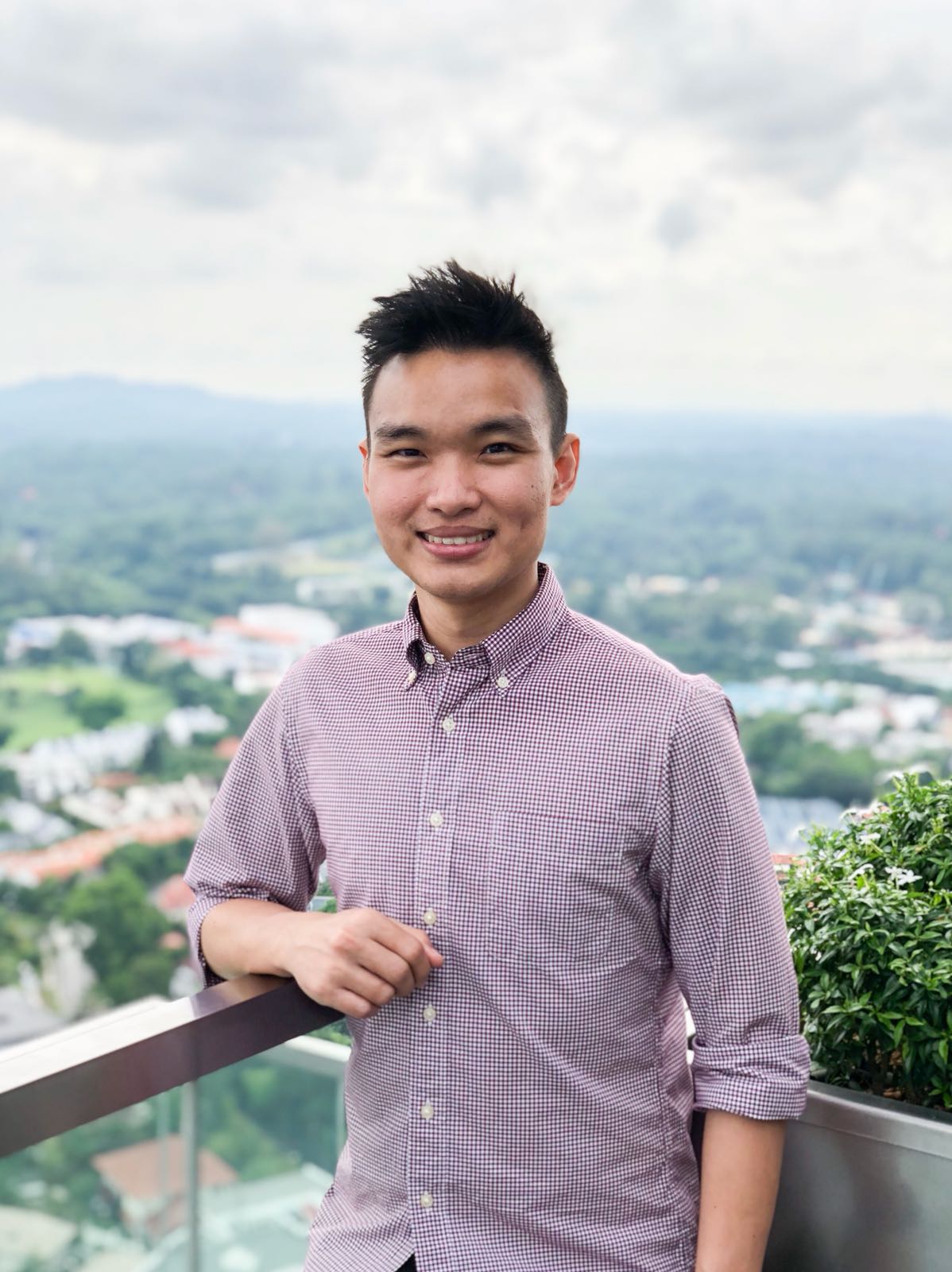
Congratulations to Joshua Yee Pin Yi (University College London) for winning the The Bob Woods Postgraduate Dissertation Prize 2019
Our congratulations to Joshua Yee Pin Yi, who produced an excellent dissertation which employed a novel empirical Machine Learning approach to explore and predict neighbourhood and gentrification changes across London as the basis for creating pre-emptive and effective policies to remediate associated ill-effects. His dissertation, entitled Unpacking the Nuances of London’s Neighbourhood Change and Gentrification Trajectories, was completed at UCL under the supervision of Dr Adam Dennett. Joshua even created a very advanced and rather fantastic interactive website to accompany his dissertation project (please see link below).
We asked Joshua to tell us a little bit about himself –
My name is Joshua and I recently pursued an MSc in Smart Cities & Urban Analytics at the Centre for Advanced Spatial Analysis (CASA), UCL. In terms of my research interests, I am deeply intrigued in the intersections between critical human geography and urban analytics, focusing on tangible socio-spatial issues across the urban landscape and using analytics as a pathway to examine them. More recently, I have also delved into the nascent field of Machine Learning, specifically to understand how it can complement conventional geospatial analysis and GIScience methods to engender insights about society, space and place in even more robust ways.
My dissertation, which looked to unpack the trajectories of Neighbourhood Change & Gentrification, was hence the synthesis of these research interests. Motivating my research was the idea that the variegated typologies of Neighbourhood Change & Gentrification were oft-convoluted, and that the diversity of socio-spatial forces at work had not been comprehensively understood. This ultimately hindered the development of effective urban policies in cities around the world. With the use of an extensive suite of empirical techniques and datasets, my dissertation therefore sought to analyse the intricacies of differing Neighbourhood Change & Gentrification typologies and map their spatial patterning across London. To serve as anticipatory insights for policy-makers, these patterns were subsequently modelled using Machine Learning to predict where the future frontiers of Gentrification could be expected to head to next.
At this juncture, I am back home in Singapore and employing the many skillsets picked up at CASA in my work with the public service sector.
Congratulations to Ellie Thompson (University of Cambridge) for winning the Joanna Stillwell Undergraduate Dissertation Prize 2019

My name is Ellie and I recently graduated from the University of Cambridge with a BA in Geography. Through my degree I have been especially interested in geopolitics and citizenship, and more broadly in the ways that geographical thought can draw links and disentangle interactions across a diversity of topics and scales. Feminist geography in particular was something that I was keen to explore in my dissertation as a method of analysis from the global to the local and the personal; not only to dismantle grand geopolitical narratives but to also center on the voices and agency of those marginalized by hegemonic discourses. My dissertation focusses on one particular initiative in Berlin by Refugee Voices Tours, a walking tour designed and guided by Syrian refugees, in light of Europe’s so-called refugee ‘crisis’. They offer walking tours of Berlin’s historical sites and compare the stories of these places with the events of Syria’s civil war and the circumstances which caused them to flee and travel to Germany. I came across the tour before starting my degree and found it immensely informative and powerful, and it was through the analytical lenses I learnt in my degree that I was increasingly captured by their project and came to understand why it was so effective. I found it touched on many aspects of geography and made evident to me that questions of migration, citizenship and geopolitics cannot be cleanly cut from place, personhood and memory. This emphasized the feminist conviction that ‘the personal is political’ and especially aligned with the need for qualitative research and ethnographic methods to access these experiences. It must be by including these voices and understanding the lived experiences of conflict that progressive discussion and policy can move forward successfully.
I am currently taking a year out to explore other interests, travel and gain some career experience. I hope to start a Masters in 2020.
Congratulations to Gordon McLachlan (University of Leeds) for winning the The Bob Woods Postgraduate Dissertation Prize 2018
Well done Gordon for your excellent dissertation on geodemographics. We asked Gordon to tell us a little about himself –

I am Gordon, and I have recently finished an MSc in Geographical Information Systems (GIS) at University of Leeds. My interests lie in how the world and its people are structured: the who, the what, the where, and, perhaps the most interestingly, the when. As a result, once I came across geodemographics in my studies I saw not only the great value they have for population studies, but also the great potential.
Geodemographics have the powerful ability to condense a myriad of socio-economic variables into an easy to synthesis output. This distilment of factors makes them great for comparing one area with another and determining spatial patterns. This is good, but when you start to think temporally rather than just geographically you can start to see how geodemographics could be utilised to compare areas not just across space, but also across time. My dissertation used on this idea to explore the socio-economic nature of neighbourhoods over time, and asked questions on whether key characteristics are engrained or if they more fluid and dynamic.
Currently I am working as a GIS consultant utilising many of the central analytical and cartographical skills I learned during my MSc dissertation research and write up.
Congratulations to Calypso Owen (University of Sussex) for winning the Joanna Stillwell Undergraduate Dissertation Prize 2018
Well done Calypso for an excellent dissertation on the topical debates around Brexit and EU Nationals. The project, titled ‘Brexit as rupture? Voices, Opinions and Reflections of EU Nationals from the Liminal Space of Brexit Britain’ has recently been published as a working paper by the Sussex Centre for Migration Research. To read more click here
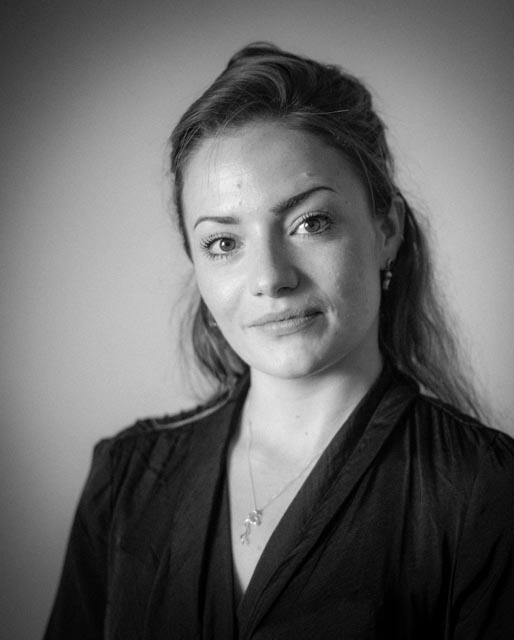
My name is Calypso and I went to the University of Sussex in 2015 to study BA Geography & International Development. My interest in world politics and current affairs intensified during my degree studies and I undertook modules that explored varied and interrelated subjects such as ethnicity and nationalism, religion in global politics, conflict and violence and the geographies of rising and declining powers. I have always been interested in the ways in which we can use geographical thought, practice and approach to think critically and consciously about the impact of events.
As a student at Sussex before, during and after the British referendum in 2016, I knew that the impact of Brexit was something I was keen to explore through my degree. The motivation for my research dissertation came from a genuine space of empathy and interest for those who found themselves unwillingly at the core of much of the campaigning, migrants. The ultimate analytical aim was to map and unpack participants’ subjectivities about their affective experiences and embodied reflections situated within the liminal space of a pre-Brexit Britain. By engaging with individuals who represented one of the symbolic and physical bodies that found themselves in this space, I hoped my paper would offer some clarity in Brexit’s liminality. As a recent graduate I am exploring different career paths and looking at the various options in graduate jobs.
Congratulations to Niall Newsham (University of Liverpool) for winning the 2017 Bob Woods Postgraduate Dissertation Prize
Well done Niall for your excellent dissertation on the highly pertinent topic of the demographic impact of Syrian migration in Germany.

We asked Niall, to tell us a little about himself –
My name is Niall and I have completed undergraduate and postgraduate courses at the University of Liverpool. I am interested in the mechanisms of population decline and the variation of fertility, mortality and migration over geographical spaces. In studying Population & Health MSc at Liverpool, I gained an understanding of contemporary demographic issues, core theory and advanced statistical analysis methods. For my dissertation, I examined the role of Syrian migrants in shaping Europe’s demographic future through applying a series of Bayesian projection models to analyse the likelihood of population growth in Germany through 2100. I am currently working as a data analyst in my hometown of Cardiff gaining practical experience in statistical analysis to strengthen my application for a PhD in the next academic year.
Congratulations to the Joanna Stillwell Undergraduate Dissertation Prize winners 2017 –
First place, Elizabeth Augarde, University of Leeds
Second place, Anwen Davis, University of Edinburgh
Third place, Elizabeth Morrison, University of Nottingham
We asked first place winner Elizabeth, to tell us a little about herself –
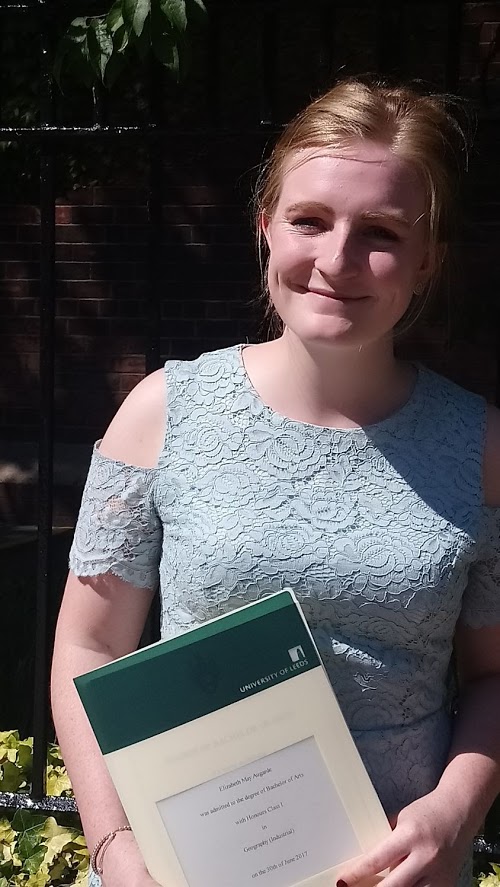
My name is Lizzie and I came to the University of Leeds to study BA Geography in 2013. I was keen to explore the relationship between geography and disease, having done some research into HIV spread at Sixth Form. My degree exposed me to a wide range of topics and methods, and I became especially interested in epidemiology and cartographical methods for exploring population geography. I loved modules that explored how population structure is related to the varying levels of disease risk of different demographic groups. This led me to undertaking a dissertation exploring the geography of suicide risk in the UK; I used GIS to identify hotspots of risk, and was fascinated to explore the way that population characteristics can so drastically affect one’s risk of suicide. I’m about to start a graduate position with Atkins Global as a GIS Consultant where I hope to put the skills and knowledge I’ve acquired at Leeds to good use!
Exceptional Awards
PGRG occasionally makes exceptional awards to recognise contributions to Population Geography.
In 2013 a PGRG Lifetime Achievement Award was given to Professor Tony Champion and Professor Tony Fielding who have been leaders in studies of migration for several decades. The Awards were presented at the International Conference on Population Geographies in Groningen.
 Population Geography